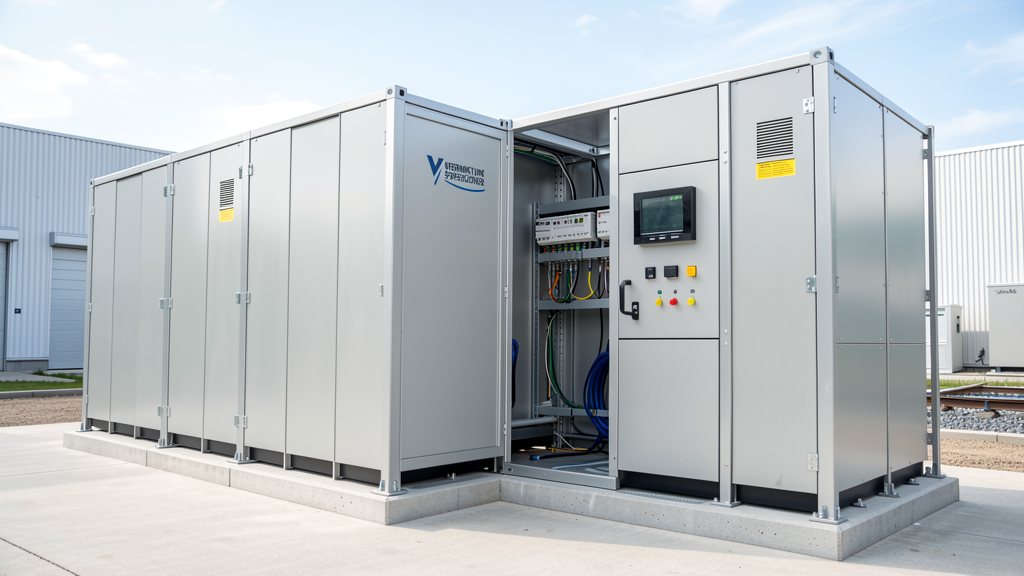
Fundamentals of Energy Data Acquisition
Energy data acquisition involves the systematic collection, timestamping, and processing of measurements from electrical, thermal, and environmental sensors. This process is critical for operational decision-making, regulatory compliance, and system optimization. Without accurate data, energy management systems cannot function effectively, leading to inefficiencies and financial penalties.
Key components include revenue-grade meters (e.g., IEC 62056-21 Class 0.5S), current transformers (CTs), voltage transformers (PTs), and data acquisition units such as RTUs. These must be installed at defined measurement points, such as grid connection interfaces and generator outputs, to capture all relevant energy flows.
Quantitative accuracy is paramount; a 1% error in energy metering can result in significant billing discrepancies over time. Regulatory standards like EnWG require specific accuracy classes for different applications, necessitating careful selection of metering equipment based on the intended use case.
Constraints include physical installation challenges such as electromagnetic interference (EMI) in high voltage environments, which may require shielded cables and proper grounding. Additionally, regular calibration is mandatory to maintain accuracy, adding operational overhead.
Metering Technologies and Standards
Revenue metering in Germany requires Class 0.5S accuracy per VDE-AR-N 4105 and EnWG, meaning ±0.5% error for active energy measurements. This ensures compliance with billing standards and minimizes financial discrepancies. Lower accuracy classes (e.g., Class 1.0) are acceptable for monitoring but not for invoicing.
DLMS/COSEM is the standard for meter data exchange, enabling interoperability across vendors. It supports multiple physical layers including RS-485, optical, and PLC, with data structures defined by IEC 62056-21. CTs and PTs must be matched to system voltage and current levels (e.g., 1000/5 A CTs for 10kV systems).
Trade-offs exist between accuracy and cost: Class 0.5S meters cost 30-50% more than Class 1.0 but are required for revenue metering. PTs for high voltage systems add complexity due isolation requirements, while CTs must be sized to avoid saturation during fault conditions.
Constraints include physical space for metering equipment in substations and the need for regular calibration. For example, a 10kV PT requires proper insulation testing every 2 years to maintain accuracy, as per VDE standards.
Hardware Components and Communication Interfaces
Remote Terminal Units (RTUs) collect data from meters and sensors, typically featuring Modbus RT over RS-485 for local devices and Ethernet for higher bandwidth. PLCs may handle real-time control in industrial settings, with I/O modules for analog and digital inputs.
Data loggers store data locally during communication failures. A system with 50 points sampling at 1-second intervals requires approximately 10MB of storage per day. Redundant power supplies are essential to prevent data loss during grid outages.
Communication interfaces vary by deployment: fiber optic provides high bandwidth and EMI immunity for substations but is costly to install. Cellular (4G/5G) is suitable for remote sites but has limited bandwidth (~100kbps), while Wi-Fi is prone interference in industrial environments.
edge case: in environments with high EMI (e.g., near transformers), unshielded cables can corrupt data. Using shielded twisted pair cables with proper grounding reduces noise to acceptable levels (<1% error in measurements).
Communication Protocols and Network Infrastructure
IEC 61850 is used in substations for real-time data exchange, with GOose messages for sub-10ms latency. For broader networks, MQTT over TCP/IP is common for cloud integration due to its lightweight nature and publish-subscribe architecture.
Security is critical; SSL/TSSL encrypts Modbus TCP data, while DTLS secures MQTT. Firewalls must segment the data acquisition network from corporate IT to prevent breaches. VLANs isolate critical control traffic from general data flows.
Latency requirements vary: spot market arbitrage needs 15-minute intervals, but real-time BESS control requires sub-100ms response. Bandwidth calculation for 50 points at 1s interval with 20% overhead is ~10kbps, which cellular networks may struggle to sustain consistently.
edge case: during grid disturbances, high-frequency data (e.g., 100Hz voltage sampling) may be needed. This requires dedicated high bandwidth links (e.g., fiber) and protocol optimization to avoid packet loss.
Data Processing and Real-time Analytics
Raw data undergoes filtering (e.g., statistical outlier removal) and time-stamping with NTP sync within 1ms. Algorithms calculate derived quantities like power factor (using voltage and current phase angles) or energy flow direction (based on sign of active power).
Edge computing preprocesses data locally to reduce bandwidth; e.g., aggregating 15-minute averages before transmission. This reduces data load by 90% compared to raw 1s data but requires sufficient processing power on edge devices.
For BESS control, real-time analytics process voltage, current, and state of charge to determine optimal charging/d discharging. A 0.1% error in voltage measurement can lead to overcharging or underutilization, reducing system lifespan.
Constraints: cloud-based analytics introduce latency (~50-200ms), making them unsuitable for critical control functions. Local processing must complete within the required response time (e.g., 50ms for frequency regulation).
Integration with BESS and Spot Market Arbitrage
BESS control algorithms use real-time grid voltage, frequency, and spot market price data to optimize charging/d discharging. Day-ahead market data is typically received every 15 minutes, while real-time arbitrage requires 5-minute intervals for accurate price signals.
Metering at grid connection points must accurately measure energy flows. a 1% error in metering can lead to incorrect arbitrage decisions, resulting in financial losses. For example, overestimating discharge energy by 1% could cost €500 annually for a 1MWh system.
Constraints: communication latency between market data sources and control systems must be <1 second. Redundant communication paths (e.g., cellular and fiber) ensure continuous data flow during outages.
edge case: during sudden price spikes, the system must respond within 5 seconds. This requires local data processing with minimal latency, as cloud-based systems introduce delays that miss arbitrage opportunities.
PV and BHKw Monitoring Specifics
PV systems require pyranometers for irradiance (±2% accuracy), module temperature sensors (±0.5°C), and string current sensors (±0.5% accuracy). These measurements enable performance ratio calculations and fault detection; a 10% drop in string current typically indicates a failure.
BHKw systems need flow meters for thermal output (±1% accuracy) and temperature sensors on inlet/outlet. Electrical output is measured via revenue meters. Efficiency is calculated as ( electrical output / ( fuel energy input + thermal output)), requiring precise fuel flow measurements.
Data must be time-synchronized to accurately model PV performance. For example, 1-minute interval data allows tracking cloud-induced fluctuations, while BHKw efficiency calculations require consistent thermal and electrical measurements within 1 second.
Constraints: soiling on PV panels affects irradiance measurements, necessitating regular cleaning and sensor calibration. BHKw efficiency calculations are sensitive to fuel flow meter accuracy; a 2% error in fuel measurement can skew efficiency by 1.5%.
Regulatory Compliance and Data validation
VDE-AR-N 4105 specifies data points like active power, reactive power, and voltage levels measured at 1-second intervals for grid-connected systems. EnWG requires accurate data for billing, so meters must be type-approved (e.g., OIMl R 46 Class 0.5S).
Data must be timestamped with NTP sync within 10ms. Validation algorithms check consistency (e.g., sum of all metered inputs equals outputs within ±0.5% tolerance). Regular audits ensure compliance with VDE-AR-N 4105 and EnWG.
edge case: during grid faults, voltage sag may cause current spikes. Systems must filter these to avoid false alarms while retaining valid fault data. For example, a 50ms threshold for voltage sag detection prevents误报 from transient events.
Data retention is mandatory for 5 years per EnWG.logs must be stored with integrity checks (e.g., SHA-256 hashes) to prevent tampering during audits.
Implementation Steps and Best Practices
Step 1: site audit to determine measurement points (e.g., grid connection, PV arrays, BHKw output) and regulatory requirements. Identify required accuracy classes and environmental constraints (e.g., EMI levels).
Step 2: select meters and sensors based on accuracy needs and environment. Install with proper calibration before deployment; e.g., CTs must be matched to system voltage and current levels to avoid saturation.
Step 3: configure communication protocols (e.g., Modbus TCP for local, MQTT for cloud) and test data flow from all points to central system. Validate latency and bandwidth using tools like Wireshark.
Step 4: implement monitoring for system health (e.g., data update rates, error rates). Regularly calibrate sensors annually per VDE standards and perform data consistency checks to ensure ongoing accuracy.
FAQ
What is the required accuracy for revenue metering in Germany?
Revenue metering requires Class 0.5S accuracy per VDE-AR-N 4105 and EnWG regulations, meaning ±0.5% error for active energy measurements. This ensures compliance with billing standards and minimizes financial discrepancies.
How often should energy meters be calibrated?
Meters must be calibrated annually per VDE-AR-N 4105. High-precision meters in critical applications may require calibration every 6 months. Calibration intervals are determined by manufacturer specifications and regulatory requirements.
Can data from multiple sources be integrated into a single system?
Yes, using protocols like DLMS/COSEM or IEC 61850. Systems must timestamp data consistently (NTP sync within 1ms) and handle different data rates. Integration requires proper protocol mapping and data validation to ensure consistency.
What are the latency requirements for real-time arbitrage control?
Spot market data must be processed within 1-5 seconds to respond to price changes. For BESS control, response time must be sub-100ms to handle grid frequency deviations. This necessitates local data processing and low-latency communication.
How does Stromfee handle data communication failures?
Data loggers store data locally during outages and transmit once connectivity is restored. Redundant communication paths (e.g., cellular and fiber) ensure continuous data flow. Checksums and retransmission protocols maintain data integrity.
What sensors are needed for accurate PV system monitoring?
Pyranometers for irradiance (±2% accuracy), module temperature sensors (±0.5°C), and string current sensors (±0.5% accuracy). These measurements enable performance ratio calculations and fault detection.
How is data validation performed for regulatory compliance?
Data is checked for consistency (e.g., input energy equals output plus losses within defined tolerance), timestamped with NTP, and validated against known benchmarks. Regular audits ensure compliance with VDE-AR-N 4105 and EnWG.
What is the role of edge computing in energy data acquisition?
Edge computing preprocesses data locally (e.g., filtering, aggregating) to reduce bandwidth usage and latency. Critical control functions (e.g., BESS response) are executed locally to avoid cloud delays, while non-critical data is sent to the cloud.