Arrowhead Stadium Kansas City: the world's loudest stadium enters the 2026 World Cup
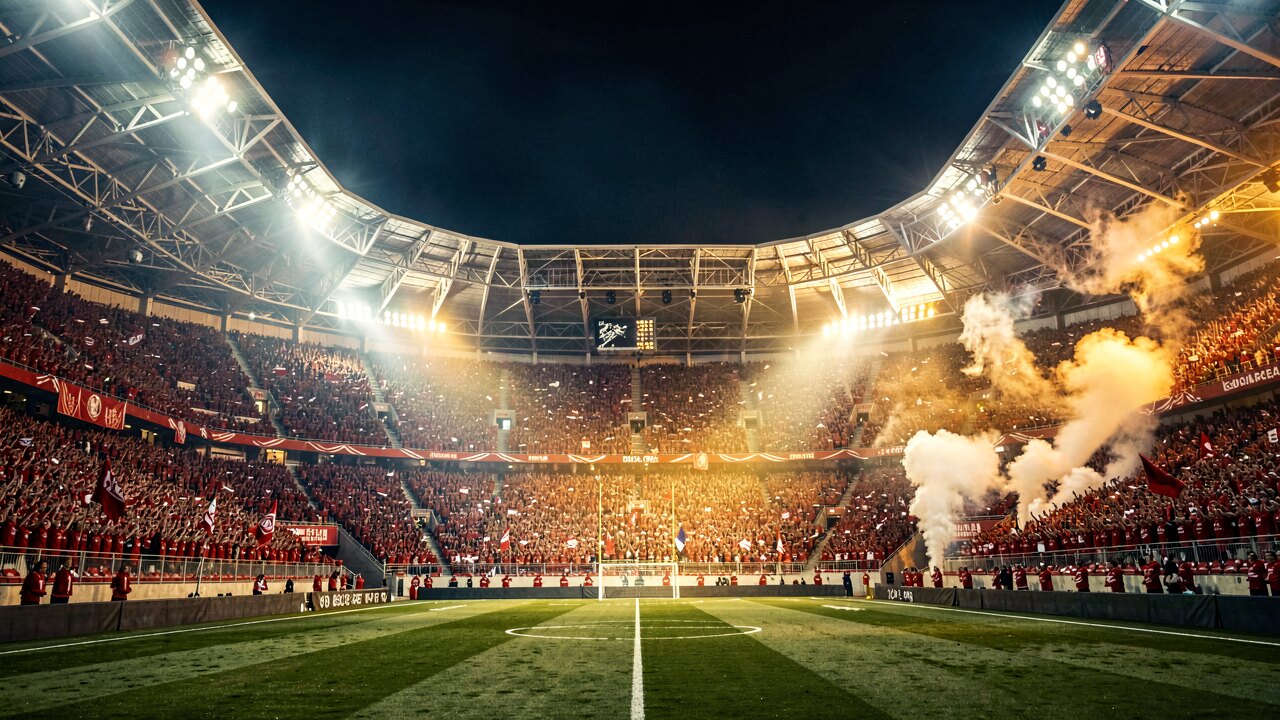
The FIFA World Cup in the USA, Mexico and Canada has been under way since June 11, 2026. One of the most distinctive host stadiums is located in Kansas City, Missouri: GEHA Field at Arrowhead Stadium, known during the tournament as "Kansas City Stadium." The home of the Kansas City Chiefs has held the Guinness World Record as the loudest stadium in the world since 2014 — and, with approximately 73,000 seats, is one of the largest open-bowl venues in the NFL. What that means for electricity consumption is immediately apparent: no roof, no monster baseline load from air conditioning, but pure, unrestrained floodlighting.
Architecture & Capacity
Arrowhead was opened in 1972 and has since undergone multiple renovations — most recently a comprehensive upgrade around 2010. The classic oval NFL bowl offers approximately 73,000 to 76,000 seats depending on configuration; for the World Cup configuration, FIFA states approximately 73,000. The stadium is located about 14 kilometres east of downtown Kansas City with no direct rail connection. There is no fixed enclosed roof — rain and wind reach the pitch and stands directly, which many fans consider a benefit for the atmosphere.
Equally characteristic is the steep, tightly raked stand geometry that slopes toward the field. It concentrates sound and is a key reason for the noise world record: on September 29, 2014, Guinness adjudicators measured a peak level of 142.2 dB(A) during the Chiefs' game against the New England Patriots — louder than a jet aircraft on the ground at takeoff thrust.
What the stadium consumes in electricity
Arrowhead is a classic floodlight-dominated stadium. Because it has no roof, two of the largest annual consumers found in enclosed NFL arenas are absent: elaborate roof-surface lighting and full-hall air conditioning. What remains is all the more concentrated:
- Floodlighting — the clear primary consumer. NFL and FIFA regulations require high, uniform illumination across the entire playing surface, measured in lux at camera positions. In conventional metal-halide installations of this scale, peak loads ran into the megawatt range; the switch to LED has significantly reduced that figure industry-wide.
- Video boards and scoreboards — NFL-scale big screens draw several hundred kilowatts.
- Catering and concession stands — industrial kitchens, fryers and cold stores for approximately 73,000 visitors are an underestimated continuous load.
- Pitch heating — relevant for Kansas City because the natural grass can freeze in winter. It plays no role during the summer World Cup, but it lowers the annual average.
- Building services (pumps, ventilation, sanitation, security systems) — baseline load throughout the year, independent of match days.
No publicly verified annual consumption figures for Arrowhead are available. As a reference: industry surveys of US professional NFL stadiums cite typical annual consumptions between 7 and 15 million kWh; a match day at full capacity runs in the order of 50,000 to 65,000 kWh. Without an air-conditioning load, Arrowhead tends toward the lower end of that range — as long as the floodlights are not running at full power for extended periods. These figures are industry-wide ranges; without a metering contract with the operator, no more precise figure can be substantiated.
Renewable Energy & Sustainability
Arrowhead is not a showcase solar stadium — that is already a consequence of its geometry: without a broad, continuous enclosed roof, the most attractive module surface is simply absent. Nevertheless, several steps have been taken in recent years:
- Solar installation 2014: Approximately 308 solar panels were installed on the stadium grounds and at the adjacent Chiefs training complex. According to operator statements, together they generate approximately 30,000 kWh per year — a largely symbolic amount relative to the total consumption of a playing season, but a verifiable first step.
- LED floodlight retrofit: The stadium has converted to LED sports floodlights. LED reduces lighting consumption compared to metal-halide lamps to roughly 40–60% of the previous value industry-wide — while simultaneously delivering better TV-grade illumination and instant switchability.
- Boiler optimisation: A previously underutilised heating boiler was integrated into the pitch heating system, replacing approximately 200 individual electric resistance heaters — a classic efficiency measure that substitutes heat for electricity.
- LEED certification for World Cup operations: As part of World Cup 2026 preparations, the stadium has reportedly achieved LEED status for match operations — partly through the LED retrofit and building automation with energy-saving HVAC systems.
Rooftop photovoltaics on a meaningful scale — as seen at Atlanta (approximately 4,000 panels) or Seattle (approximately 3,750 panels) — do not exist at Arrowhead. That is unsurprising given the building structure, but worth stating plainly.
Arrowhead at the 2026 World Cup
Kansas City hosts six matches: four group-stage games (including defending champion Argentina with Lionel Messi on June 16), a Round of 16 match (July 3), and the quarter-final on July 11. Six evening fixtures mean six full-capacity floodlit evenings — for a stadium with no meaningful on-site solar generation, all electricity is drawn from the local grid of Kansas City Power & Light (now Evergy). Missouri generates its electricity predominantly from coal and natural gas plants; the share of renewables was most recently around 15–20% — a sober context behind the consumption figures for those six match evenings.
Stromfee Analysis
Arrowhead exemplifies the typical profile of an open, classically built NFL arena: the absence of a roof and full air conditioning saves energy on an annual average, but shifts virtually all the efficiency potential to the floodlighting system — and that is precisely where the LED transition has delivered the greatest leverage in recent years. Rooftop PV, as installed in the solar-champion stadiums in this World Cup group, is structurally absent; the existing small installation and building automation are solid, but not a benchmark.
The same trade-off — where is the real lever: LED, solar or storage? — applies to every industrial facility, every PV plant and every combined heat and power unit. Our freely accessible tools calculate that for your installation using real market prices.
Transparency & Sources: Capacity and fixture data from FIFA/KickoffAdventures/VisitKC (as of June 2026). Noise world record: Guinness World Records, verified September 29, 2014 (142.2 dB). Solar and efficiency data from operator statements at Chiefs.com and KSHB report on LEED certification (2026). Annual consumption ranges from industry surveys of US professional stadiums (electricchoice.com, SEIA, EnergySage) — not measured Arrowhead values. Missouri electricity mix: U.S. Energy Information Administration. All consumption figures are order-of-magnitude estimates; without a metering contract with the operator, no more precise figures can be substantiated. The image shown is an AI illustration (FLUX·2), not a photograph of the real stadium.
Have your plant assessed?
Independent grid & drive analysis, direct marketing and metering concept — from HR Energiemanagement.
Get in touch →