BMO Field Toronto: Canada's Smallest World Cup Stadium and Its Power Grid
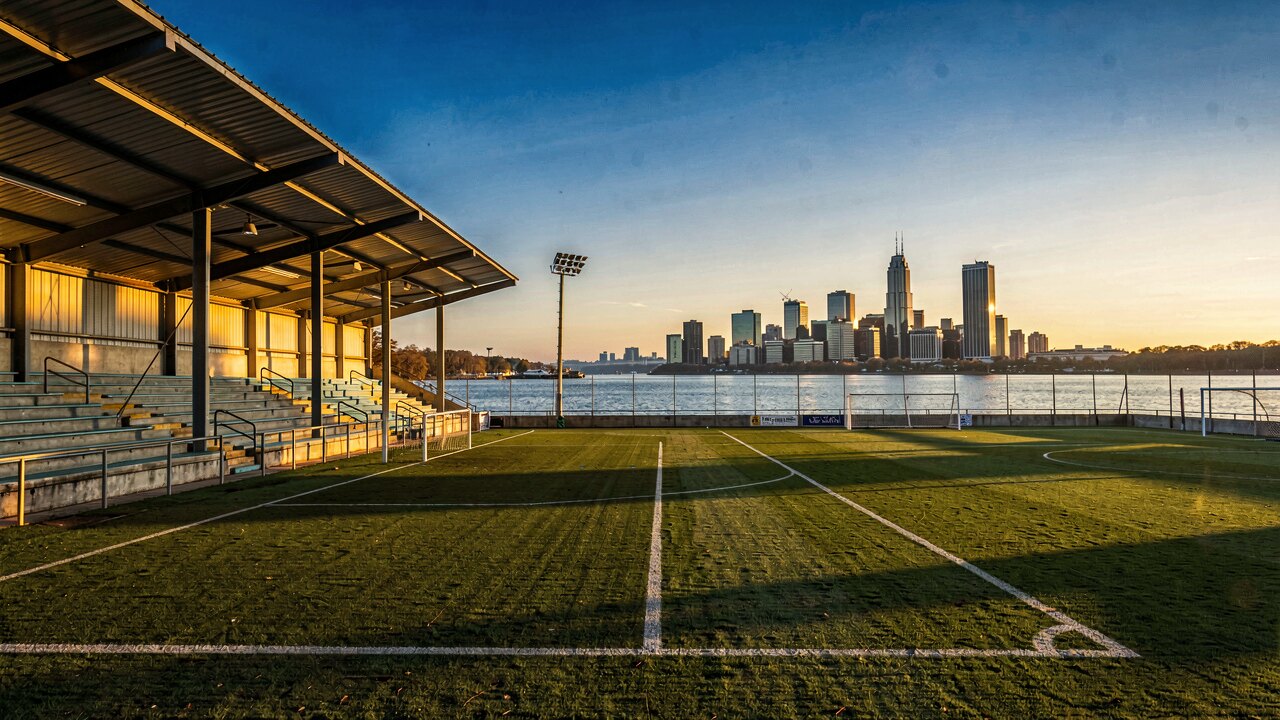
On June 12, 2026, Toronto made history: Canada faced Bosnia and Herzegovina at BMO Field — the first World Cup group match on Canadian soil since the 1986 tournament hosted in Mexico, and in many ways the opening act of a new era for North American football. During the tournament the stadium carries the official FIFA name "Toronto Stadium" for sponsorship reasons. With approximately 45,000 seats in World Cup configuration, it is the smallest of the sixteen World Cup venues — which makes it one of the most manageable, yet also most interesting, cases from an energy perspective: open, compact, and embedded in Ontario's unusually clean power grid.
Architecture & Capacity
BMO Field opened on October 20, 2007 — originally built for the FIFA U-20 World Cup and as home stadium for the then newly founded MLS club Toronto FC. Initial capacity was just over 20,000 seats. Between 2014 and 2016 a first major expansion brought capacity to around 30,000; at the same time a partial roof was added, covering the east, west and south stands with a steel cantilevered canopy. The north end remained open. Since 2016 the Toronto Argonauts (Canadian Football League) have also played their home games at the stadium.
For the 2026 World Cup, the City of Toronto and operator MLSE (Maple Leaf Sports & Entertainment) jointly invested approximately CAD 146 million (approx. CAD 123 million from the city, approx. CAD 23 million from MLSE). The centrepiece: 17,000 temporary additional seats on stands at the north and south ends, raising total capacity to approximately 45,000. The upgrade also included four new high-resolution LED video boards, a new sound system, modernised catering areas with self-service technology, and a premium lounge at midfield level on the west side. Construction ran in two phases: Phase 1 from December 2024 to August 2025, Phase 2 from December 2025 to March 2026.
The stadium is located on the Exhibition Place grounds directly on the Lake Ontario waterfront, a few minutes' walk from the CN Tower district. It is an open stadium with no air conditioning — the natural-grass pitch is exposed to the elements, which in Toronto in June means moderate temperatures of around 20–25 °C.
How Much Power the Stadium Consumes
The operator does not publish specific match-day measurements. Based on industry surveys of North American professional stadiums, order-of-magnitude figures can be derived: an open stadium of this capacity class (approx. 45,000 seats) typically draws between 30,000 and 55,000 kWh on a match evening — spread across roughly ten hours including pre- and post-match operations. Peak demand during the match is in the range of several megawatts. The lower capacity compared to NFL domed stadiums such as NRG Stadium Houston (~72,000 seats, air conditioning) or AT&T Stadium Dallas (~94,000 seats, air conditioning) noticeably reduces consumption.
The dominant consumers are the same as at almost every major arena:
- Floodlighting: The World Cup renovation installed new LED sports lighting meeting FIFA broadcast standards. LED conversions at comparable arenas have industry-typically reduced lighting consumption by around 40–60% compared to older halide metal-vapour systems.
- Four new LED video boards: The World Cup renovation added four large-format high-resolution displays — a significant increase over the previous setup.
- Catering: Newly modernised commercial kitchens, refrigerated storage and self-service stations across multiple levels.
- Pitch heating and building services: Unlike more southerly US venues, Toronto has a pitch heating system installed for the cold months. It is not in use during the World Cup matches in June — but it remains a line item in the stadium's annual electricity budget.
What sets BMO Field apart from enclosed stadiums: no air conditioning for the spectator area. In Miami, Houston or Dallas, cooling is often the single largest consumer on a match evening. Toronto in June does not need that.
Renewable Energy & Sustainability
According to publicly available operator information, there is no on-site photovoltaic installation on the stadium building — none was included in the World Cup renovation package. The decisive sustainability factor at BMO Field therefore lies not on the roof, but in the grid to which it is connected: the electricity network of the Province of Ontario.
Ontario shut down its last coal-fired power plants in 2014 — the first province or region of this size in North America to do so. The current electricity mix (figures from IESO, the Independent Electricity System Operator, for 2025) shows:
- Nuclear power: approximately 48% of generated electricity (Bruce, Darlington, Pickering)
- Hydropower: approximately 24%
- Wind, solar, biomass: combined approximately 12%
- Natural gas: approximately 13% (mainly peak load and contingency reserve)
The Ontario grid operator IESO puts the share of low-emission generation at approximately 84%. This means: every kilowatt-hour that Toronto Stadium draws from the grid on a World Cup match evening is largely nuclear- and hydro-based — with no direct CO₂ emission at the point of generation. Compared to venues such as Houston or Dallas, which are connected to the Texas ERCOT grid (substantial natural gas and remaining coal share), this represents a structural difference.
For the World Cup renovation itself, the City of Toronto communicated a focus on efficiency: new LED lighting, modernised building technology, more efficient catering equipment. Sustainability certifications for the stadium itself (LEED or similar) are not on record based on available sources.
Stromfee Assessment
BMO Field represents an approach that is often undervalued in German energy discourse: grid quality over self-generation. A solar roof on a stadium is visible and easy to communicate — but when the grid to which the building is connected is more than 80% carbon-free, additional self-generation has less leverage than in a coal-heavy grid. For Toronto this means: the stadium does not need a PV roof to have a better climate footprint than many solar-equipped US arenas further south.
The same logic applies to industrial facilities in Germany thinking about the actual marginal emissions factor of their grid connection — and about when storage makes sense not just economically but also ecologically. For anyone who wants to check what negative prices, the Solar Peak Act (§51 EEG) and direct marketing mean in concrete terms for their own PV system:
Transparency & Sources: Opening year, capacity and renovation details from Wikipedia/StadiumDB/CBC News/City of Toronto press release (as of June 2026). World Cup match schedule: FIFA/FWCLive/StadiumDB (as of June 2026). Renovation costs (CAD 146 million) and construction details: CBC News, TSN, The Stadium Business (2025/2026). Ontario electricity mix: IESO (Independent Electricity System Operator), figures for 2025; IESO metric "84% low-emission" from public reporting. Consumption ranges (30,000–55,000 kWh per match evening) are industry estimates from US/CA stadium surveys — no measured match-day values for BMO Field. The image is an AI illustration (FLUX·2), not a photograph of the actual stadium.
Have Your System Assessed?
Independent grid & drive analysis, direct marketing and metering concept — from HR Energiemanagement.
Get in Touch →