Lincoln Financial Field Philadelphia: Solar, Wind and the 2026 World Cup
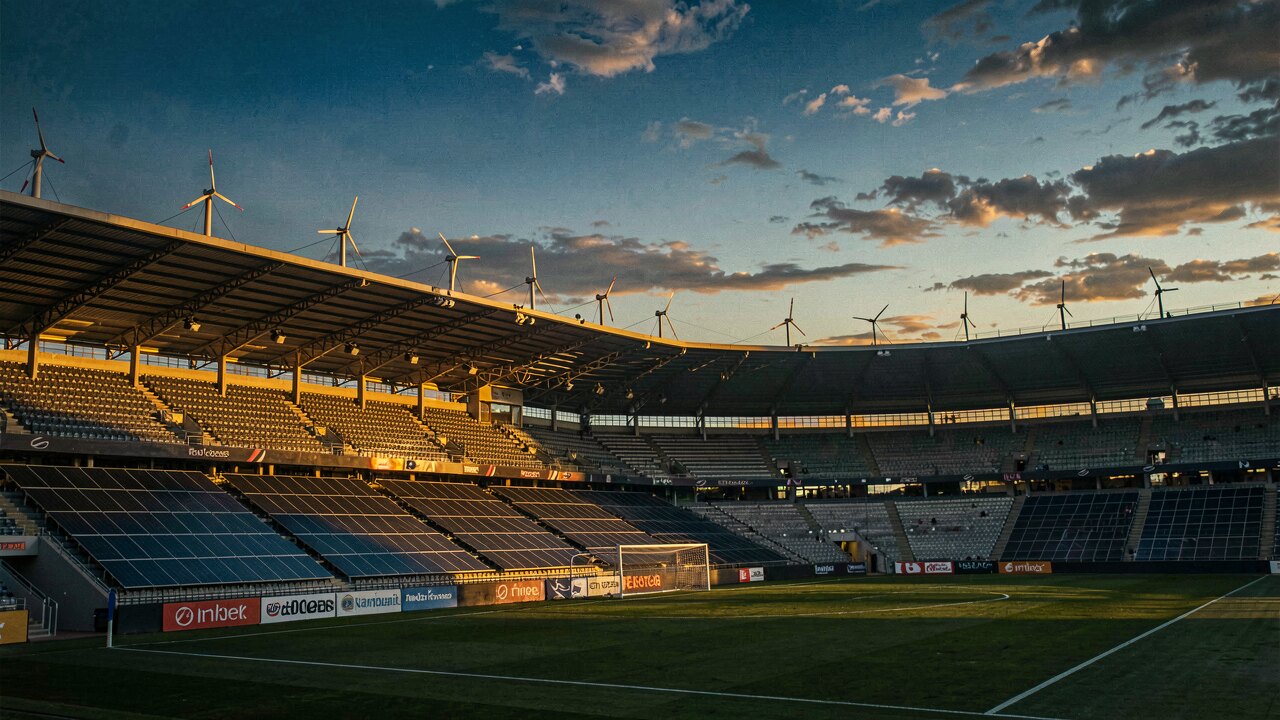
Philadelphia is one of the key match venues in the USA at the 2026 World Cup: Lincoln Financial Field — officially named "Philadelphia Stadium" for the tournament for sponsorship reasons — hosts approximately six World Cup matches according to organiser information, including a round-of-16 fixture on July 4, 2026, the 250th anniversary of American independence. Running behind the floodlights that day is an energy system that, just over ten years ago, was considered one of the most ambitious renewable energy projects in American professional sport.
Architecture & Capacity
The stadium opened on August 3, 2003, replacing the demolished Veterans Stadium. It is located in the South Philadelphia Sports Complex, within walking distance of Citizens Bank Park (baseball) and Wells Fargo Center (basketball/ice hockey). The home club are the Philadelphia Eagles of the NFL. The roof is open — there is no air-conditioning plant for the interior — which fundamentally changes the energy profile compared with air-conditioned domed stadiums such as NRG Stadium in Houston.
The capacity of approximately 67,600 seats makes the stadium a mid-sized arena in the World Cup field — significantly smaller than the final venue MetLife in New Jersey (~82,500) or AT&T Stadium in Dallas (~94,000), but in the same tier as Lumen Field in Seattle. The open design keeps baseline consumption for air conditioning low, which is unusually energy-efficient for an NFL stadium in Philadelphia's temperate climate.
What the Stadium Consumes in Electricity
The operator does not publish specific measurements of matchday consumption. From industry surveys of US NFL stadiums, order-of-magnitude figures can be derived: a comparable open stadium of this size typically draws between 40,000 and 65,000 kWh on a match evening — spread across approximately ten hours of operation including pre- and post-event activity. Peak load during the match can reach several megawatts across the industry.
The four dominant consumers are, as everywhere: floodlighting (significantly more efficient since the LED upgrade), the large video screens, food & beverage operations with their catering kitchens and cold stores, and pumps and fans in the building services. The absence of an air-conditioning complex — the single largest consumer in Houston or Dallas — makes Lincoln Financial Field a comparatively lean electricity user at this size class.
The Eagles have progressively converted the stadium to LED floodlighting in recent years. The precise schedule and savings rate have not been fully published by the operator; LED upgrades at comparable NFL arenas have typically reduced lighting consumption by 40–60% according to industry figures.
Renewable Energy & Sustainability
This is where the arena stands out. From 2012/2013, NRG Energy in partnership with the Eagles constructed a renewable energy installation that was unmatched in US professional sport at the time. The confirmed facts from operator and NRG statements:
- 11,108 solar panels — distributed across the facade along 11th Street, the south side of the building, and carport structures on the adjacent parking areas. The car-park installation delivers the majority of generated output.
- 14 micro wind turbines along the roof edge on the north and south sides of the stadium.
- According to the NRG press release, the combined system generates approximately 4 megawatts of generation capacity and covers around one third of total annual stadium electricity demand on a balance-sheet basis.
- On a pure matchday basis the balance is even more favourable: the installation generates approximately six times the electricity consumed by all ten Eagles home games in a season combined, according to the operator.
These figures come from the original NRG press release and Eagles publications; independent measurement campaigns covering long-term operations are not known. Actual annual generation depends on occupancy, degradation and weather.
In 2018 came the LEED Gold certification from the U.S. Green Building Council — recognition for the overall package of renewable generation, water consumption, waste management and building operations. The stadium had already received LEED Silver in 2013.
A sober comparison: with around 11,000 panels and 4 MW, the Lincoln Field installation is in the same order of magnitude as the rooftop PV at Mercedes-Benz Stadium in Atlanta (~4,000 panels) or Lumen Field in Seattle (~3,750 panels) — and well below the current world record held since November 2025 by Signal Iduna Park in Dortmund with more than 11,132 panels and over 5 MW. What makes Philadelphia special is not the panel count alone, but the early combination of roof, facade and car-park solar with wind turbines — that was a novelty in US professional sport in 2013.
Stromfee Assessment
Lincoln Financial Field illustrates a principle we also observe with industrial PV plants and CHP operators in Germany: own generation provides the greatest relief when demand is high year-round — not only on match days. The Eagles installation generates 365 days a year, even when the stadium stands empty. That is precisely what makes the annual balance so favourable: generating the equivalent of six match days per year sounds impressive, but above all it signals that the building's base consumption outside events is considerable.
Anyone who wants to know, for their own PV plant or storage system, how fluctuating exchange prices, the solar peak law (§51 EEG) and negative-price hours affect actual revenue can check that with our free tool in just a few minutes:
Transparency & Sources: Capacity and opening date per Wikipedia/StadiumDB (as of June 2026). Solar and wind data (11,108 panels, 14 turbines, 4 MW, ~33% annual coverage, six-fold matchday amount) from NRG Energy press release and Eagles publications (2013); LEED Gold certification: U.S. Green Building Council / Philadelphia Inquirer (December 2018). World Cup schedule: FIFA / Visit Philadelphia / philadelphiaeagles.com (as of June 2026). Consumption figures are industry ranges from US stadium surveys, not measured matchday values. The image is an AI illustration (FLUX·2), not a photograph of the real stadium.
Get your plant assessed?
Independent grid & drive analysis, direct marketing and metering concept — by HR Energiemanagement.
Get in touch →